
Penguin species of Australia
Six penguins breed in Australian jurisdiction — one on the mainland coast, five on the wild subantarctic islands — while a handful of others appear only as rare, storm-blown visitors.
Only the little penguin nests on continental Australia. The others belong to the far south — the World Heritage island of Macquarie and the remote Indian Ocean territory of Heard — where they gather in some of the largest seabird colonies on the planet.
Each entry covers what the bird looks like, how big it is, where it lives in Australia, and how it is faring. Where sources differ on conservation status, we say so.
Little Penguin
Eudyptula minor · also called the fairy or blue penguin
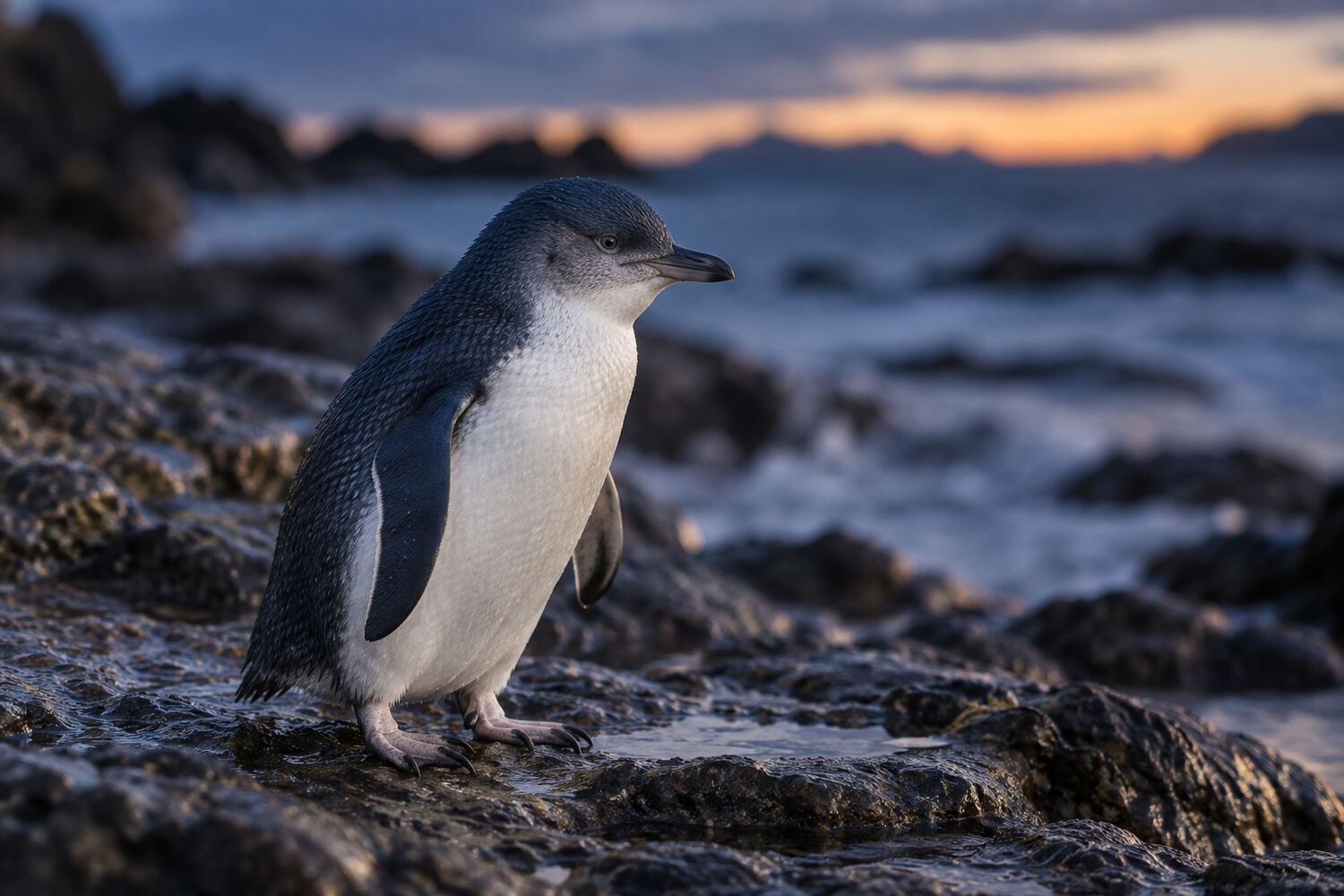
The smallest penguin in the world, and the only one that breeds on mainland Australia. Slate indigo-blue above and clean white below, with a short dark bill and pale eyes. Little penguins come ashore only after dark to avoid predators — the origin of the famous evening "parade."
They can even sleep at sea between fishing trips. While the species overall is not threatened, the Manly colony in Sydney is a listed endangered population, and several colonies have declined sharply.
Where to see little penguinsKing Penguin
Aptenodytes patagonicus
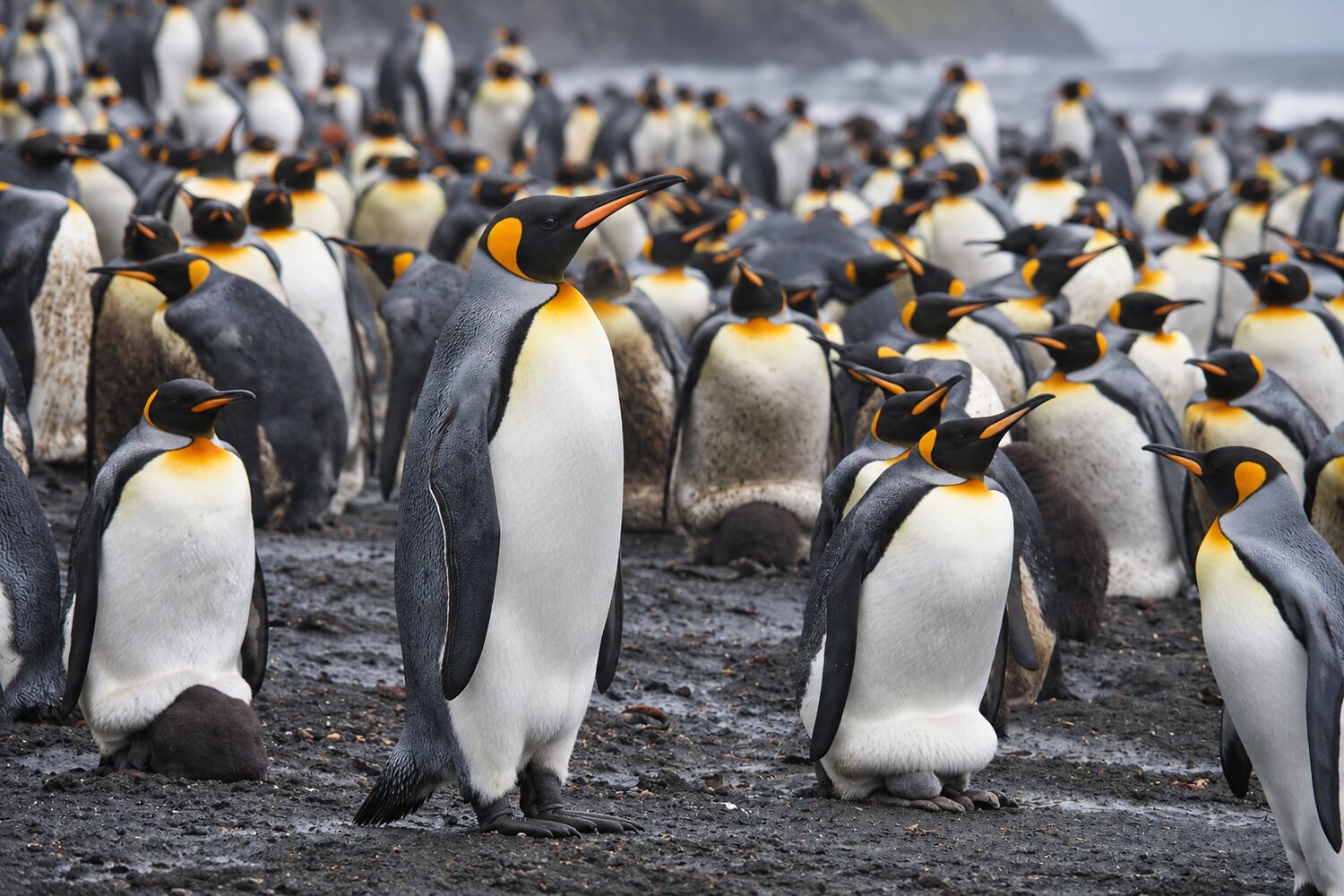
The second-largest penguin on Earth, unmistakable with its vivid orange ear patches, orange-washed upper neck and long, slender build. Around 120,000 pairs breed on Macquarie Island — roughly a tenth of the world's kings.
Their unusual 14–16 month breeding cycle means brown, woolly chicks can be seen almost year-round. Each pair incubates a single egg balanced on their feet beneath a warm flap of skin.
Royal Penguin
Eudyptes schlegeli
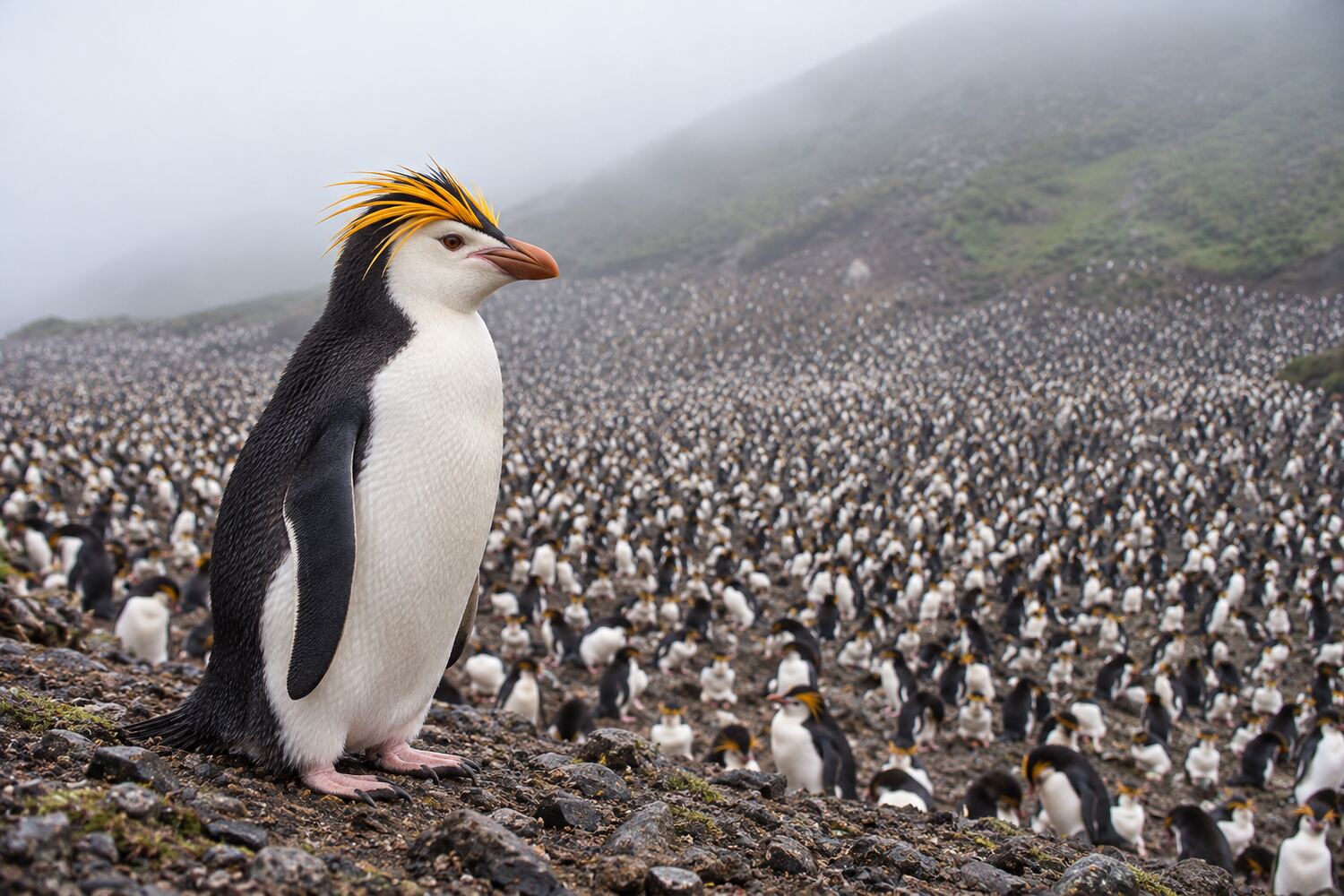
The largest of the crested penguins, and one of the few penguins essentially unique to Australian territory — it breeds almost nowhere but Macquarie Island. A spectacular orange-yellow crest spreads back from the forehead above a pale, whitish face, which tells it apart from the very similar macaroni penguin.
Around 750,000 pairs nest on Macquarie; the Hurd Point colony alone holds some 500,000 pairs, among the largest penguin gatherings anywhere.
Gentoo Penguin
Pygoscelis papua
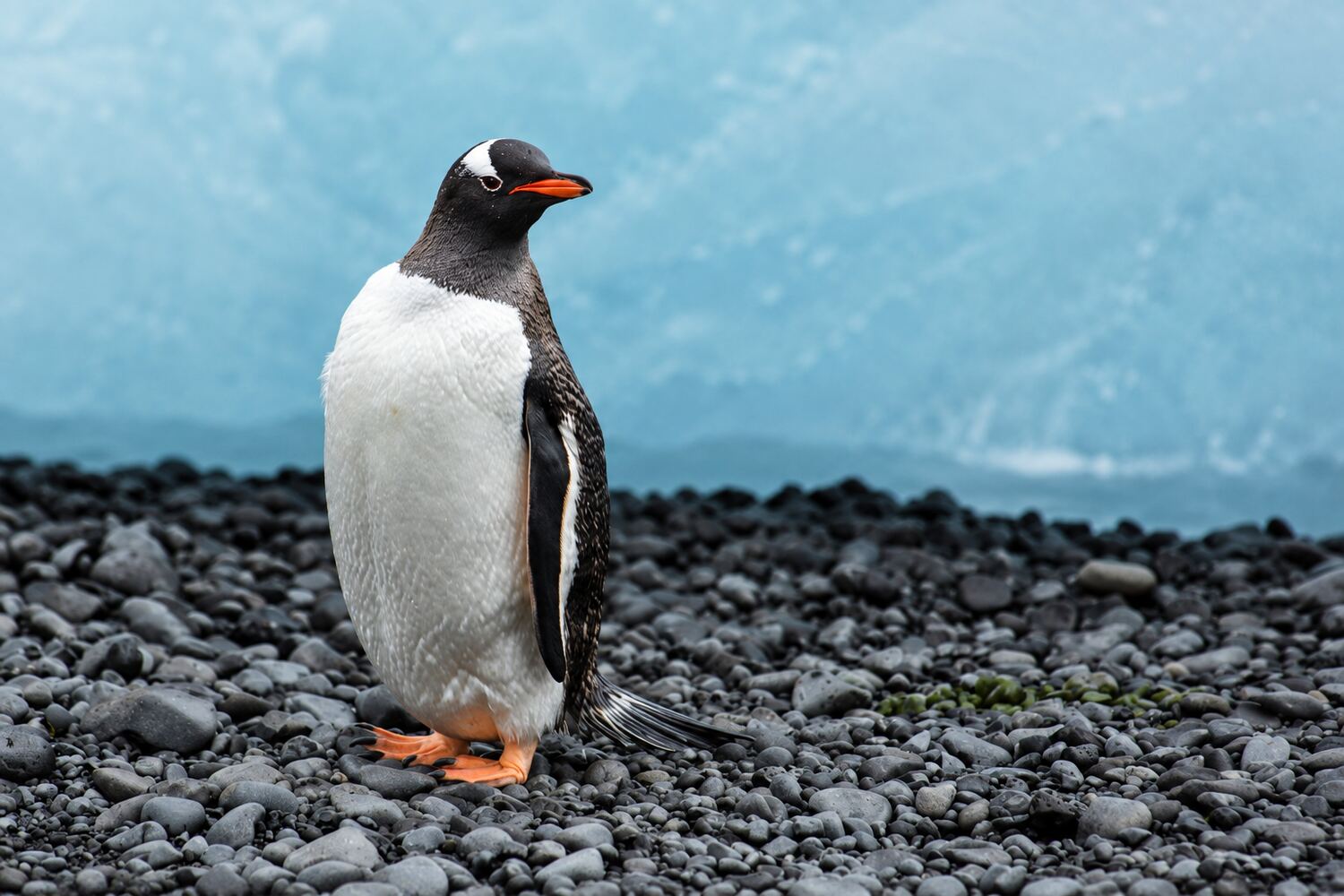
The third-largest penguin, easily known by the broad white bonnet that curves across the crown above its eyes, plus a bright red-orange bill and peachy-orange feet. Gentoos are resident on Macquarie Island year-round, with around 2,500 breeding pairs.
They are the fastest underwater swimmers of any bird, reaching bursts of around 35 km/h.
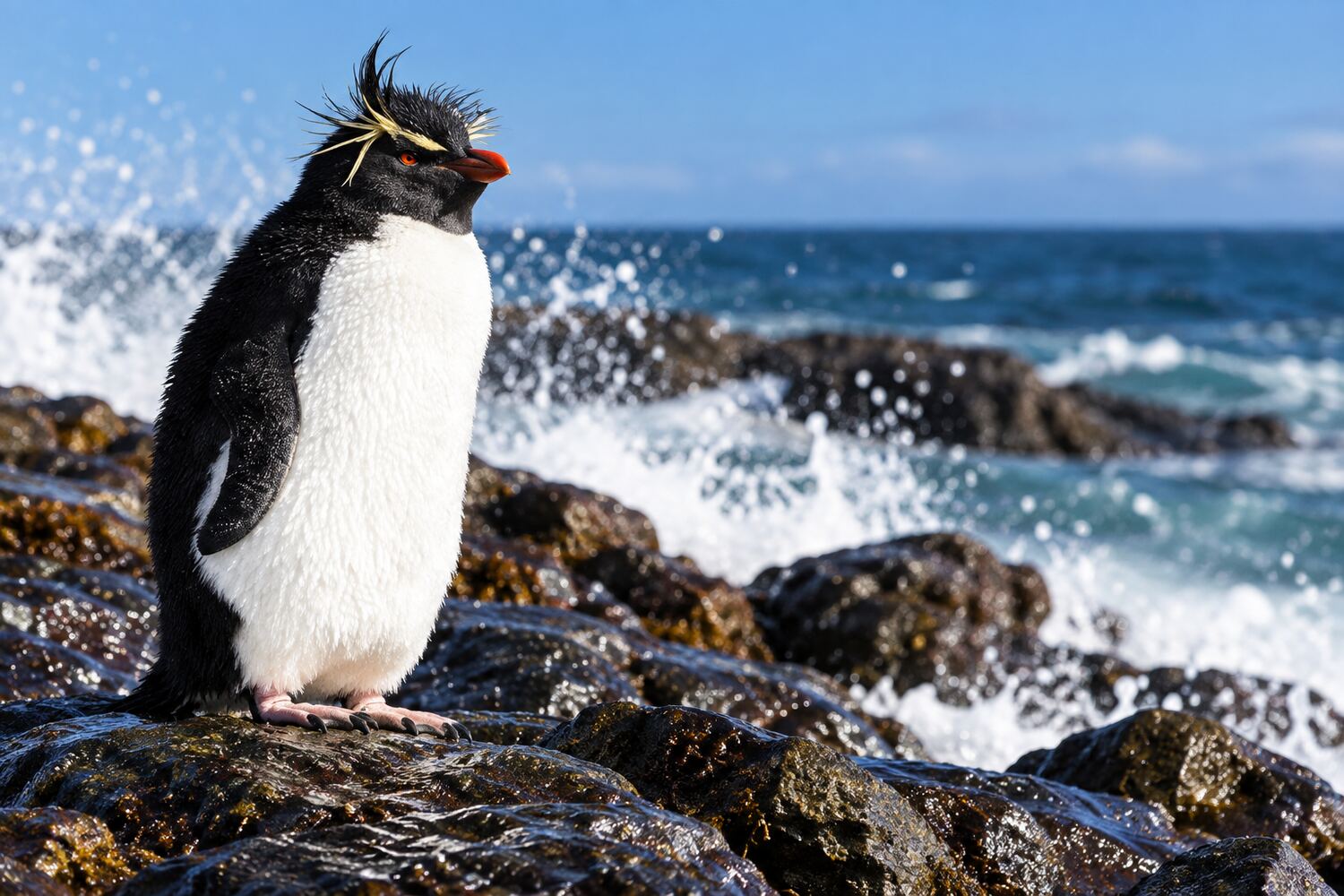
Southern Rockhopper Penguin
Eudyptes chrysocome (eastern form)
The smallest of the crested penguins and the most punk of the lot: spiky yellow-and-black plumes that jut out sideways, fierce red eyes and a stubby red-orange bill. True to the name, it bounces up steep rock with both feet instead of waddling.
The Macquarie and Heard birds are the eastern form of the southern rockhopper; rockhopper taxonomy is still debated.
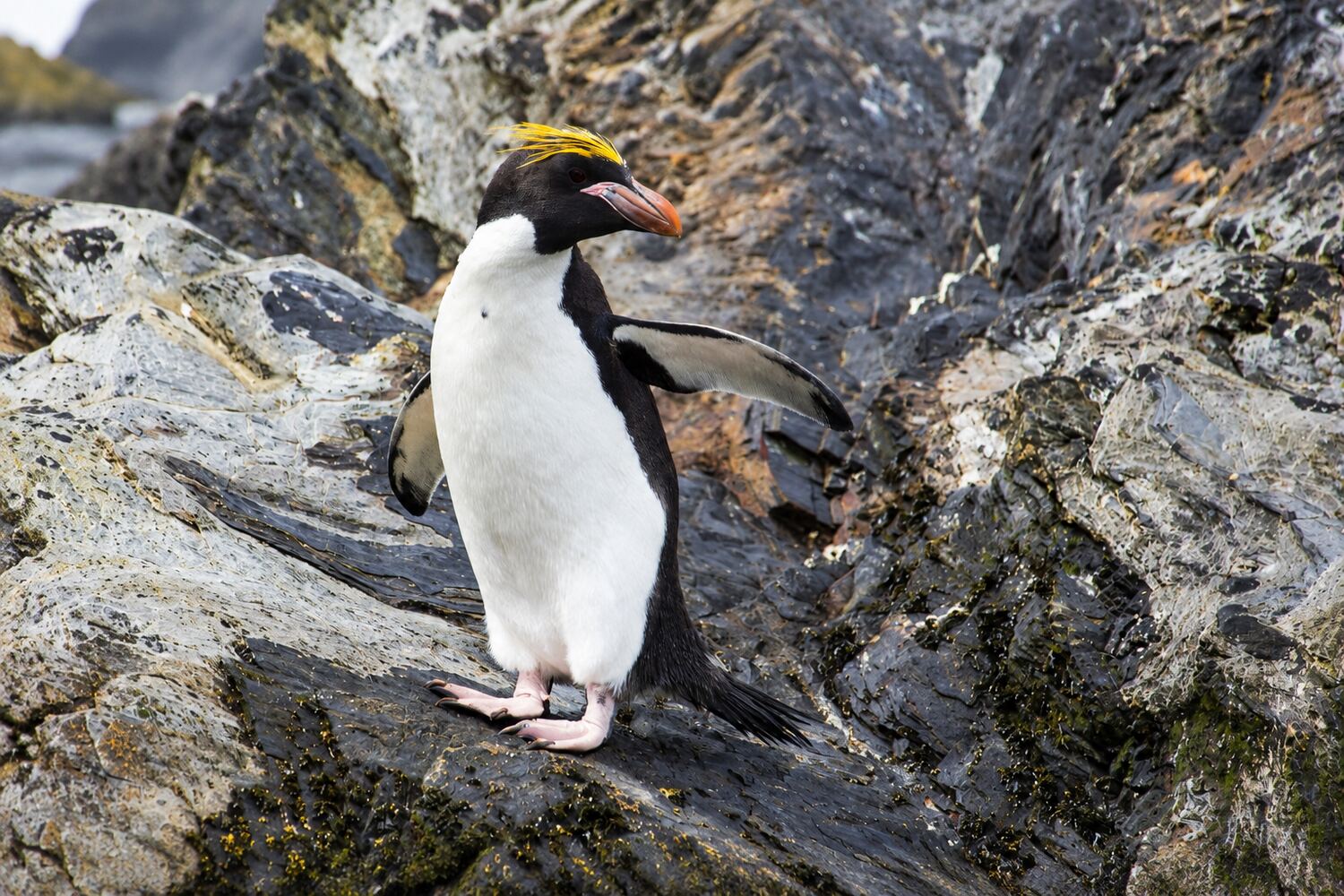
Macaroni Penguin
Eudyptes chrysolophus
A crested penguin with a black face and back cut sharply from a white front, and a flamboyant golden crest that springs from a central patch on the forehead. Its clear Australian stronghold is the huge colony on the steep slopes of Heard Island.
Named after the flashy 18th-century "macaroni" dandies, it is so numerous worldwide that it may be the most abundant penguin on Earth. It hybridises with the royal penguin.
Penguins that only pass through
A few more penguins turn up in Australian waters — almost always as single, storm-blown birds washing ashore in Tasmania. They do not breed here.
Fiordland Penguin
A New Zealand breeder and by far the commonest vagrant to Tasmania and southern Victoria.
Snares & Erect-crested
Crested penguins from New Zealand's subantarctic islands, recorded only a handful of times.
Emperor · Adélie · Chinstrap
Antarctic species that reach Australia only as extraordinary strays — not birds you can expect to see.